

All about hurricane season
Have you ever boarded an airplane and suddenly it shakes so much that you can't let go of the armrest? This is how it starts Atmospheric Turbulencethe new Canal Meteo podcast hosted by meteorologist and geographer Albert MartinezThe program, which invites us to discover the best kept secrets of meteorology, with a special focus on hurricanes.
- Eduardo Rodriguezoceanographer, explains how ocean heat fuels cyclones and why the timing of the season responds to marine energy cycles.
- Kamila Dazaproducer and editor of the program, takes us by the hand through historical moments such as the creation of the Saffir-Simpson scale or the founding history of Miami, an iconic city vulnerable to hurricanes.
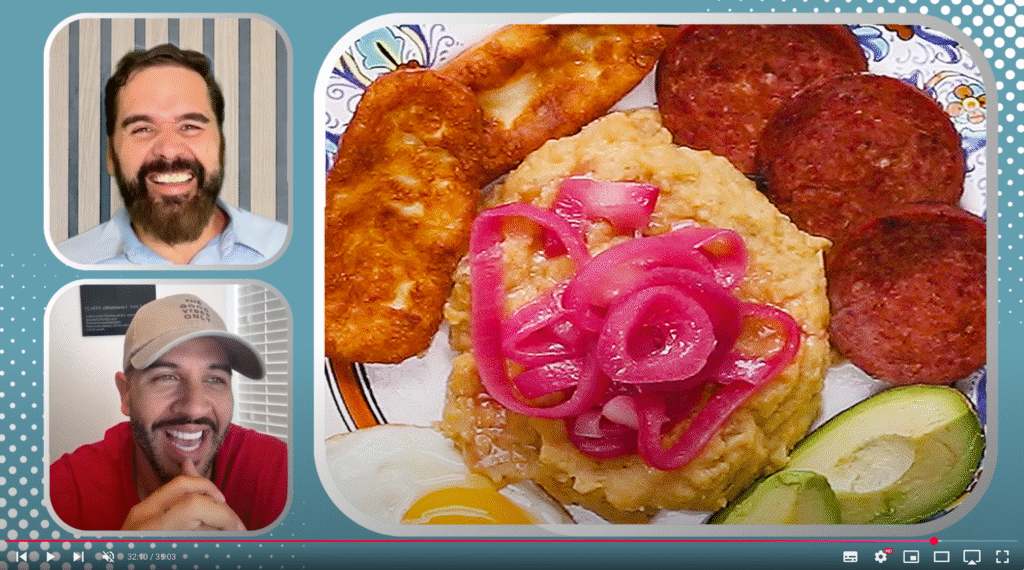
- Jesus Diaz («Yisus»)chef and communicator, shares a traditional recipe of the cuban sandwichas a cultural and tasty closure of this first trip.
In episode 6 of the podcast Atmospheric Turbulencemeteorologist and geographer Albert Martínez takes us on a fascinating journey through the history and criteria behind the names of hurricanes. Aboard the "flight" of this high-altitude podcast, accompanied by oceanographer Eduardo Rodriguez and historian Kamila Daza, we discover that the process of naming tropical cyclones has more science and politics than we might imagine.
In this episode:
- 01:30 They are the most active female names
- 03:00 The history of Balvanera
- 07:00 The official list of names
- 10:00 Names in the Pacific
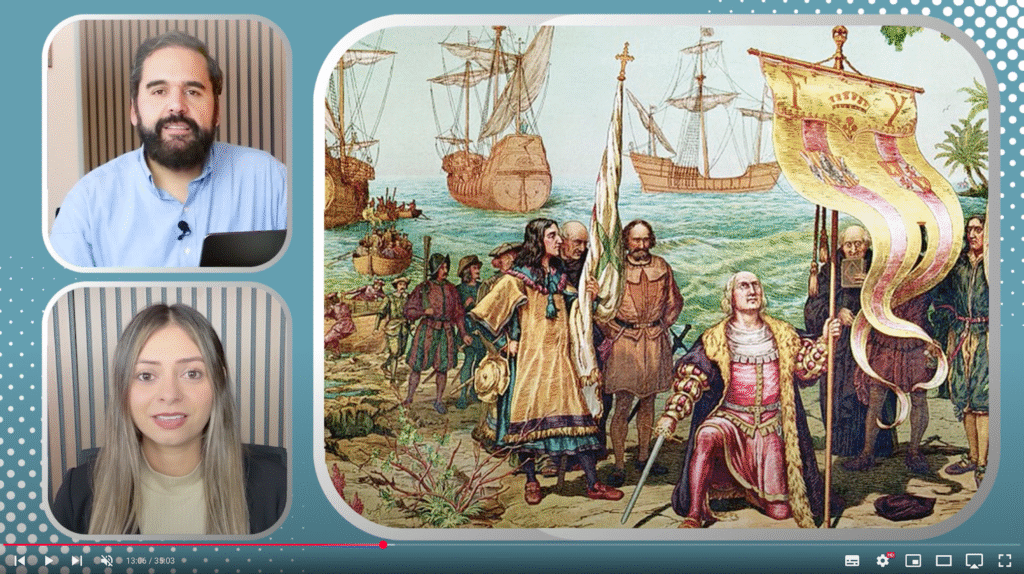
- 12:15 Who discovered the Antilles?
- 15:00 Who removes the names of cyclones?
- 19:00 2005, one of the years with the highest number of retired names
- 22:00 Recalling some of the most destructive hurricanes
- 26:00 The second voyage of Columbus
- 31:00 The mangú of our chef Yisus
Why do hurricanes have names?
The names of hurricanes are not chosen at random or on a whim. Originally, cyclones were baptized after their destructive passage, sometimes by the saint of the day or even by the name of the ship that sank, as in the case of the tragic hurricane "Balvanera". But it was in Australia, at the beginning of the 20th century, that meteorologist Clement Wragge initiated a more systematic system of naming them, first with letters and then with feminine names.
During World War II, U.S. Navy pilots popularized the practice of naming typhoons after their girlfriends or wives, which resulted in all-female lists for decades. However, after criticism from feminist and scientific groups, mixed lists with alternating male and female names were introduced in 1979.

Who chooses the names today?
Currently, the World Meteorological Organization (WMO) is in charge of maintaining six rotating lists of names for the Atlantic, which are repeated every six years, except when a hurricane is so destructive that its name is removed. Examples such as Katrina, Maria, Irma, or more recently, Otis, have been left off the lists because of the devastating impact they caused.
The WMO also makes sure to include names in English, Spanish and French, representing the countries that share the Atlantic and the Caribbean, avoiding the use of accents, "eñes" or special characters to facilitate international communication.
What happens when the names run out?
In extremely active seasons - as was the case in 2005 - the 21 names provided were exhausted (the letters Q, U, X, Y and Z are not used due to the lack of common names). In the past, the Greek alphabet was used, but this generated confusion. Today, an alternative list of supplementary names is used.
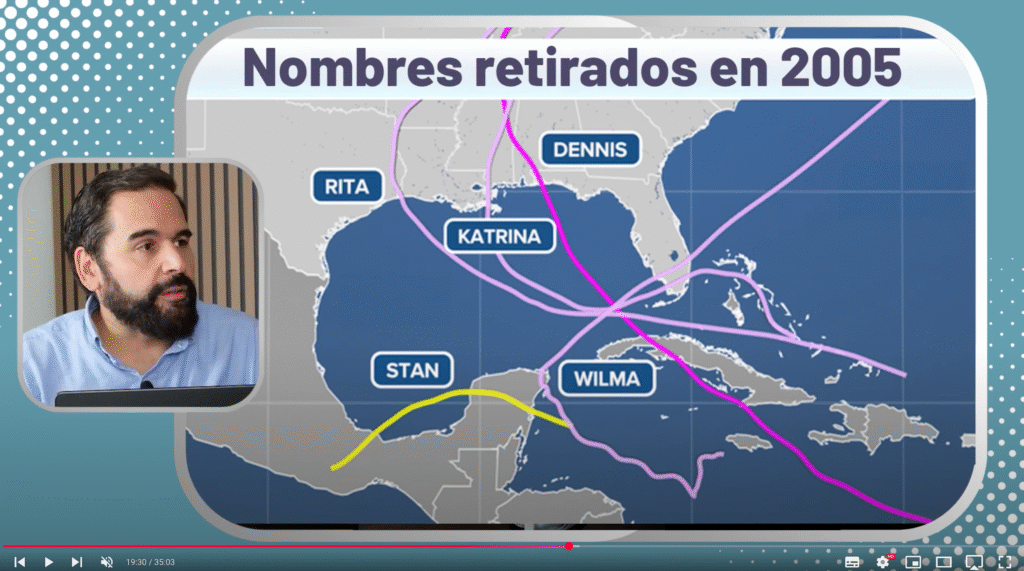
Why are more names retired with certain letters?
The letter "I" heads the ranking of retired names, with 14 hurricanes removed from the list, as it usually coincides with the peak of the season (August and September). It is followed by the letters C, D and F. It is a sign that the impact is not only measured by the intensity of the winds, but also by the material and human damage.
History, culture... and Caribbean food
This episode also takes us to discover the origin of the name "Caribe", derived from the indigenous Carib people, and to tour the Lesser Antilles, a key arc of islands in the colonial and meteorological history of the Atlantic. Kamila Daza guides us through this historical journey, while Chef Jesús tempts us with the taste of Dominican mangú and the famous "tres golpes".
🎧 First audio episode now available at buzzsprout.
Follow us on social networks: @AlbertElTiempo | @CanalMeteo
 Español
  English