
July 2025 will be a spectacular month for sky lovers. From planetary conjunctions to lunar occultations and meteor showers, this month offers an astronomical agenda full of moments to stop, look up and reconnect with the universe.
Like meteorologist and passionate about astronomy, I always recommend taking advantage of these events to reconnect with nature, better understand the cycles of the sky and marvel at what happens beyond our atmosphere. Here's a complete guide - with dates, times and observing tips - so you don't miss any of them.
🔭 July 4: Mercury astronomical observation
📍 Apparent separation from the Sun: 25°54'
✨ Magnitude: 0.5
🕐 Best time to observe: just before dawn
Mercury will reach its greater angular separation from the Sun to the westwhich means it will be visible at dawn, very close to the eastern horizon. This is one of the best times of the year to observe it with the naked eye or binoculars, so get up early and don't miss it!
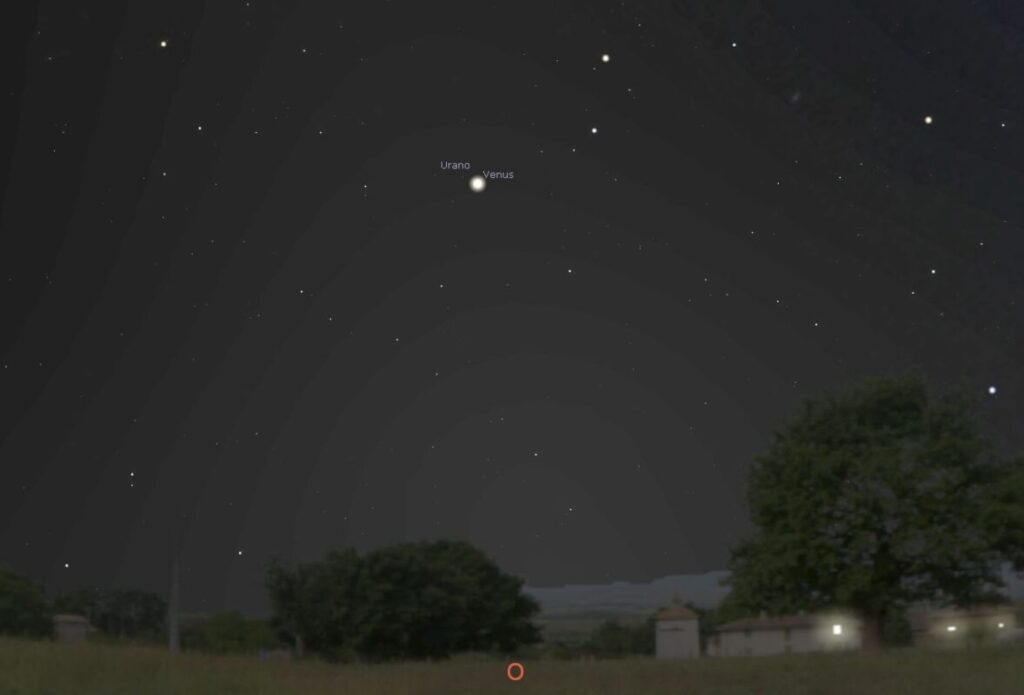
💫 July 4: astronomical observation of Uranus and Venus
🕐 Closer approach: 12:45 GMT
📍 Apparent distance: 2°21'
✨ Magnitude of Uranus: 5.8 | Magnitude of Venus: -4.1
That same day, Uranus will approach Venus in the sky, visible in the constellation Taurus. Venus will shine brightly, visible to the naked eye, while Uranus will require binoculars or a telescope to distinguish it.
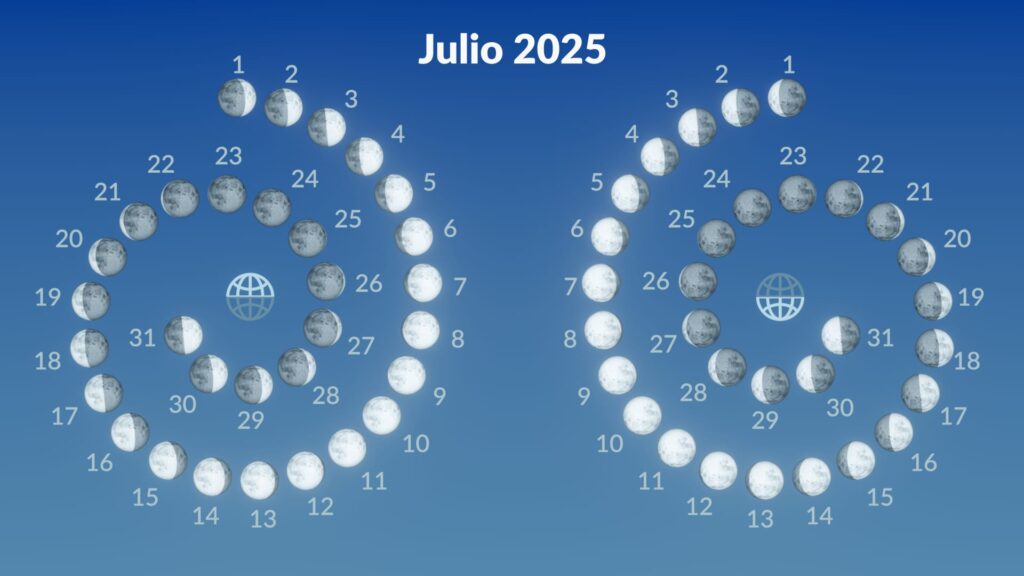
🌕 July 10: Full Moon of the Stag.
🕒 Exact time: 20:37 GMT
🌌 Constellation: Sagittarius
This Full Moon is known as the "Deer Moon".It marks the period when male deer begin to develop their new antlers. Although the Full Moon only lasts for an instant, it will be fully illuminated for at least two nights. Ideal for photographic captures with urban or natural landscapes.
📸 Observation tip: Look for an elevated or clear horizon location to the east just at sunset.
🌗 July 16: Jupiter astronomical observation
🪐 Saturn:
🕐 Approach: 07:53 GMT | Conjunction: 10:19 GMT
📍 Apparent distance: ~3.5°
🌠 Visible to the naked eye in Pisces.
🔵 Neptune:
🕐 Approach: 08:15 GMT
📍 Apparent distance: 2°26'.
Telescope or binoculars required.
A doubly interesting early morning. First, the Moon (70% illuminated) will visually approach Saturn, and soon after, Neptune. This is a great opportunity to locate these planets by following the lunar track.
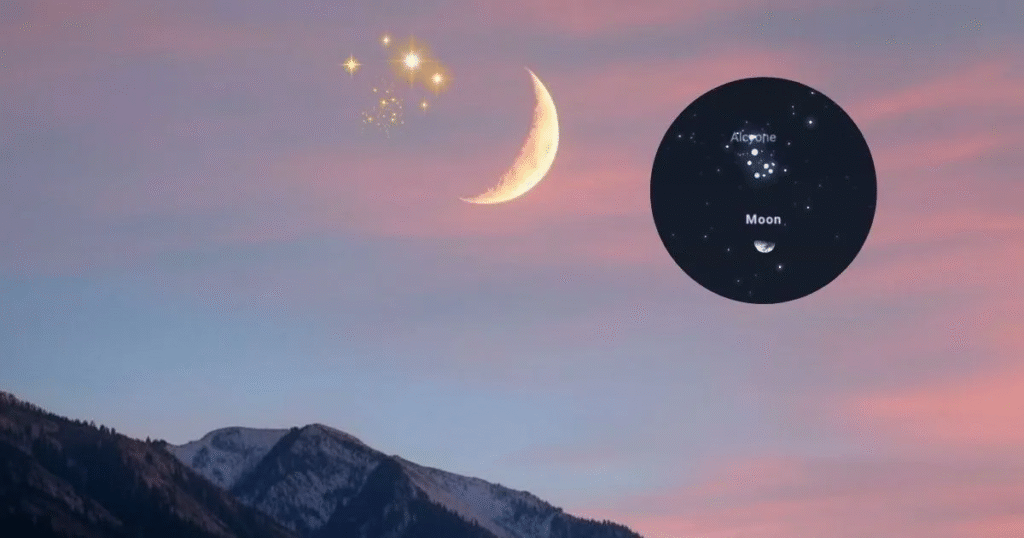
🌌 July 20: Moon and Pleiades
🕐 Conjunction: 10:27 GMT
📍 Apparent distance: 0°42'
🌙 Lunar illumination: 24%
✨ Location: Taurus constellation
The crescent Moon will align with the Pleiades (star cluster also known as "the seven sisters")creating a beautiful scene for binoculars and night photography.
🌖 July 23: Moon and Jupiter in Gemini
🕐 Conjunction: 04:20 GMT
📍 Apparent distance: ~4°54'
🌙 Lunar illumination: 3%
🔭 Ideal for telescopes and binoculars
Shortly before sunrise, the thin waning Moon will pass close to Jupiterthe gas giant. Both will be seen in the constellation Gemini. This is an excellent time to observe the Galilean moons of Jupiter.
🌑 July 24: New Moon
🕒 Exact time: 19:11 GMT
In this phase, Moon aligns between the Earth and the SunIt will not be visible. But this darkness is an ally: it is the best time of the month to observe the deep skysuch as clusters, nebulae and galaxies.
🔴 July 28: Lunar occultation of Mars.
🕒 Home: 17:49 GMT | End: 19:09 GMT
📍 Visible from: parts of Antarctica
🌙 Lunar illumination: 16%
📌 Location: boundary between Leo and Virgo
For about 80 minutes, the Moon will completely hide Mars from some regions of the southern hemisphere. For most observers, it will be a close conjunction visible to the naked eye. This type of event is perfect for binocular observation or long exposure photography.
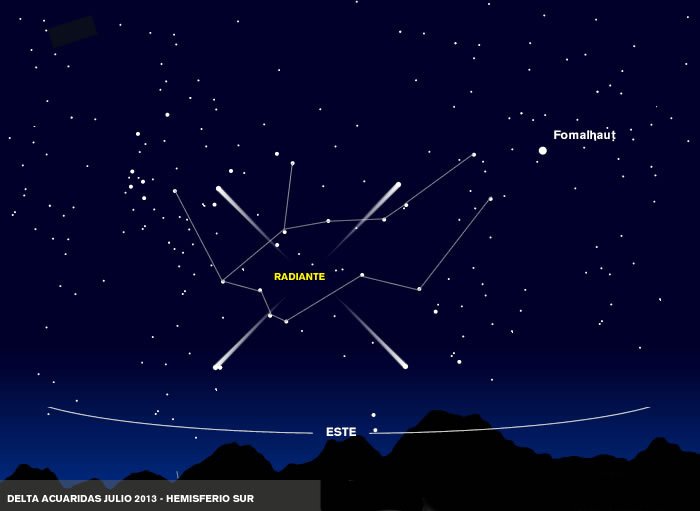
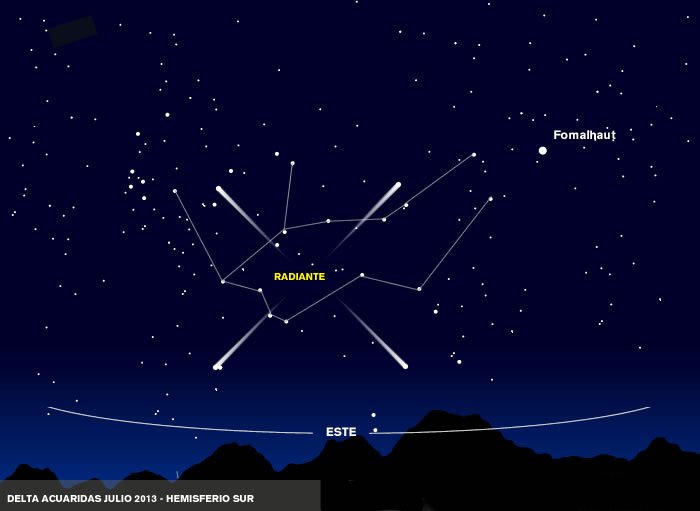
☄️ July 30-31: Peak Southern Delta Aquarid meteor shower
🌠 Expected rate: ~25 meteors/hour
🌓 Lunar illumination: 42%
🗓️ Active: July 12 - August 23
🕐 Best time: around 2:00 a.m. local time
🌎 Visible from: all over the world, especially in the southern hemisphere
This shower is known for its fast and weak meteors, which leave persistent trails. Although the Moon will be partially illuminated, it will set early and will not interfere too much.
✨ Conclusion.
July 2025 will be a month full of windows to the universe. Whether at dawn or in the middle of the night, the sky offers unique encounters between planets, the Moon and shooting stars. Dare to observe, capture or simply contemplate. In an increasingly accelerated world, looking at the sky is still an act of astonishment... and of pause.
-
🗓️ Would you like to receive this astronomical agenda every month?
Subscribe to our newsletter or follow us on social networks: @canalmeteo.tv
 Español
  English