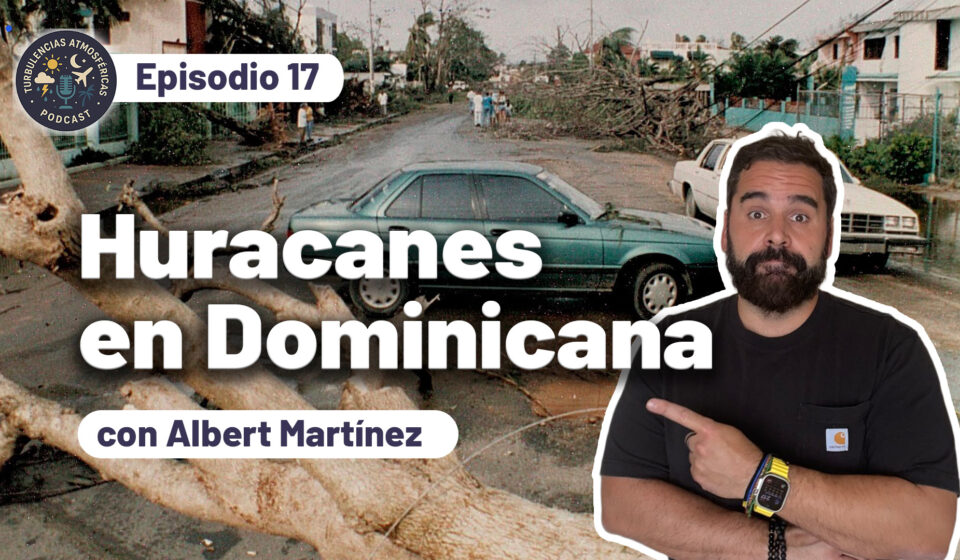

Two hurricanes have forever changed the history of Dominican Republic. David in 1979 and Georges in 1998 left scars of destruction, but also showed the strength of a people who never give up.
Hurricane David (1979)
In August 1979, the Dominican Republic experienced one of the most memorable natural disasters in its history: Hurricane David. It reached the country with category 5 on the Saffir-Simpson scale, the highest possible, and unloaded its full force on the territory. Torrential rains and hurricane-force winds devastated entire communities.
The toll was devastating. More than 2,000 people lost their lives, most of them in the Dominican Republic. It is estimated that about 70% of the country's crops were destroyed, leaving the country in a food crisis. Around 200,000 people were left homeless and the road infrastructure was seriously affected: bridges, roads and buildings were swept away by the waters and wind.
The economic cost amounted to more than US$1.5 billion in 1979, a figure that reflects the magnitude of the tragedy. The lack of preparation and early warnings meant that the population was particularly exposed to the effects of David, making it a social and economic disaster that marked a before and after in Dominican memory.
Hurricane Georges (1998)
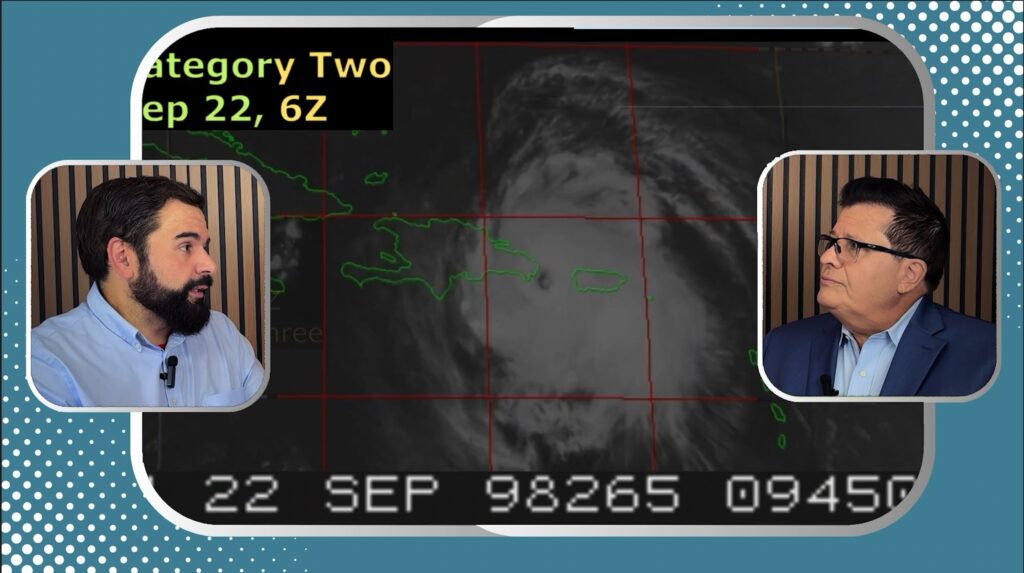
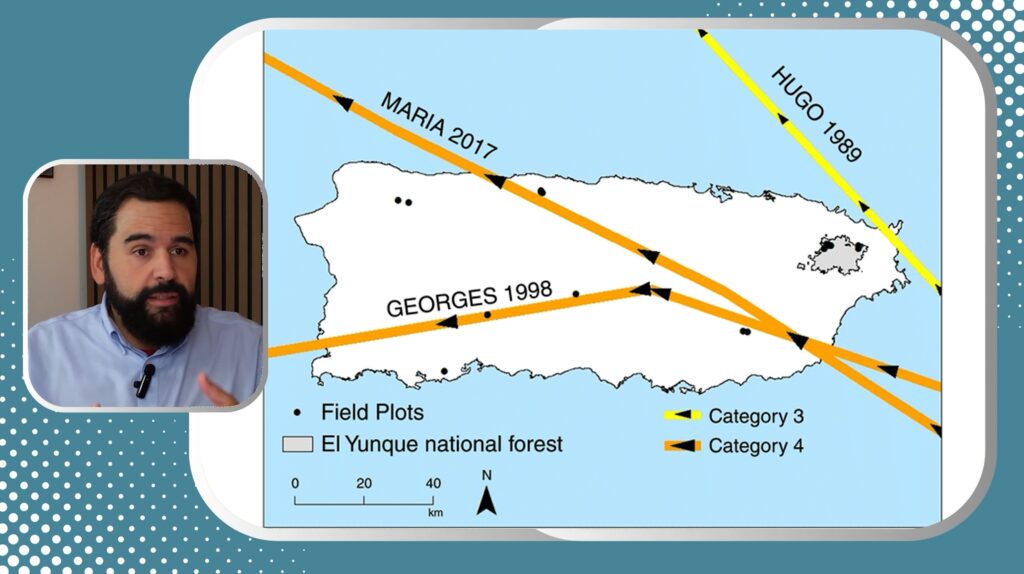
Almost two decades later, in September 1998, the country once again suffered another historic cyclone: Hurricane Georges. It reached category 4 and left a trail of destruction that is still clearly remembered. The natural phenomenon affected several Caribbean islands, but in the Dominican Republic the impact was particularly strong.
The passage of Georges left 283 people dead and more than 263,000 affected. The authorities had to set up emergency shelters to house more than 100,000 people who had lost everything. Material damage was enormous, estimated at more than 33 billion Dominican pesos. Agriculture, energy and transportation suffered critical blows, with crops lost, roads cut off and communities isolated for weeks.
Beyond the physical losses, Georges also brought with it health threats from the proliferation of waterborne and mosquito-borne diseases due to the large accumulation of standing water. It was a painful reminder of the Caribbean's vulnerability to tropical cyclones.
Two hurricanes that marked the nation
Both David and Georges demonstrated the fragility of the Dominican Republic in the face of extreme weather events. Both left thousands dead, millions in losses and a country that took years to recover. However, they also demonstrated the resilience of the Dominican people, who with effort and solidarity managed to move forward after each tragedy.
Traditions and curiosities of the Dominican Republic
Beyond the hurricanes, the Dominican Republic is a land of vibrant history and culture. Christopher Columbus arrived on the island in 1492 and named it "Hispaniola," making it the first permanent European colony in the Americas. This mix of Taino, Spanish and African roots has shaped the country's identity today.
Music is one of its most recognized hallmarks. Merengue and bachata are rhythms that were born on the island and today are heard all over the world. In gastronomy, dishes such as "la bandera dominicana" (rice, beans and meat), sancocho, mangú and traditional sweets such as habichuelas con dulce stand out.
Pico Duarte: the roof of the Caribbean
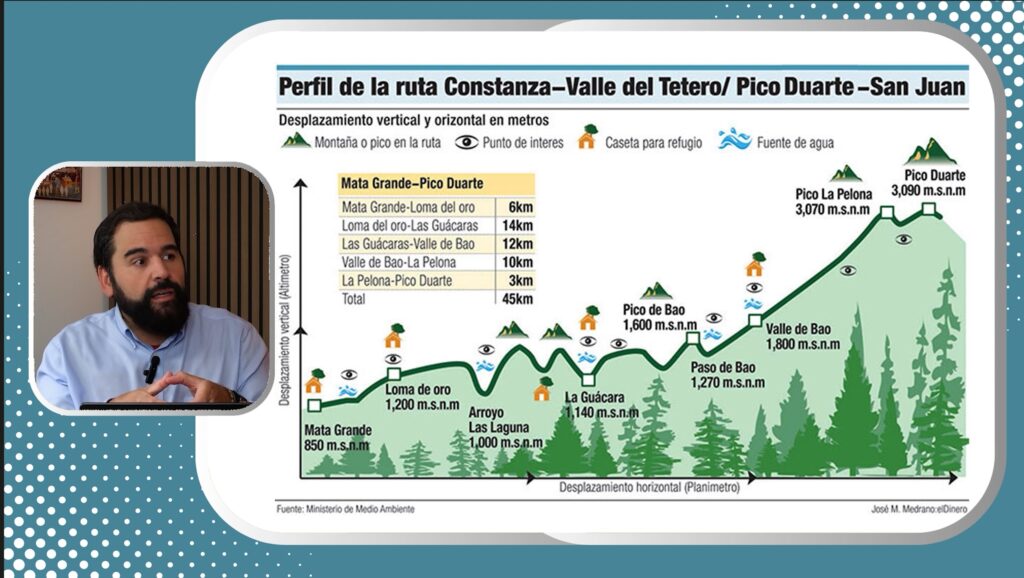
The Duarte Peak is the highest mountain in the Dominican Republic and the entire Caribbean. It rises to 3,101 meters above sea level and is part of the Central Mountain Rangealso known as the "backbone" of the island.
This imposing peak bears the name of Juan Pablo Duarteone of the Fathers of the Nation and main ideologist of the Dominican independence. Formerly known as La Pelona GrandeThe first of its kind, it was officially baptized with its present name in 1965.
Nature and environment
Pico Duarte is within the Armando Bermudez National Park and of the José del Carmen Ramírez National Parkprotected areas that conserve a great biodiversity. On its slopes grow forests of creole pines, manaclas and other endemic species. It is also home to unique animals, such as the hutia, the solenodonte and several endemic birds.
The climate varies greatly with altitude. At the base, tropical temperatures prevail, but at the summit it can drop below 0 °C during the early morning. It is not uncommon to find frost or freezing temperatures in winter, which is surprising for a Caribbean island.
Tourism and adventure
Climbing Pico Duarte is one of the most sought after experiences for hikers and nature lovers. The most popular routes start from La Ciénaga de Manabao (Jarabacoa) y San José de las Matas. The ascent can take between two and four days, depending on the chosen route and the group's pace.
During the tour, visitors cross rivers, mountain forests and breathtaking landscapes until they reach the summit, where there is a statue of Juan Pablo Duarte and a panoramic view that encompasses a large part of the island.
A national symbol
Beyond being the highest point in the Caribbean, Pico Duarte represents pride and resistance for Dominicans. It is a place of ecological, historical and cultural pilgrimage that recalls the natural grandeur of the country and the figure of Duarte as the father of the nation.
Festivities also occupy a special place: Carnival, celebrated with colorful costumes and parades, and Holy Week, lived with religious and family fervor. Baseball, meanwhile, is the national sport and a source of pride thanks to the large number of Dominican players who have shone in the Major Leagues.
The Dominican Republic is also a country of great natural wealth. Its white sand beaches, mountains and national parks attract millions of visitors every year. Among its curiosities are the Cave of Wonders, blue amber - a unique semiprecious stone - and its pioneering role as a gateway for European colonization on the continent.
---
In this chapter:
02:10 Hurricane Georges
03:40 Peak of the hurricane season
06:00 La Española
07:30 The island's most destructive hurricane
09:00 The Dominican Republic is born
13:00 Hurricane David
15:00 Duarte Peak
18:00 The Saffir-Simpson Scale
20:00 Discovering Dominican Republic
23:00 What we have learned
You can see all the chapters of Atmospheric Turbulence on our website.
 Español
  English