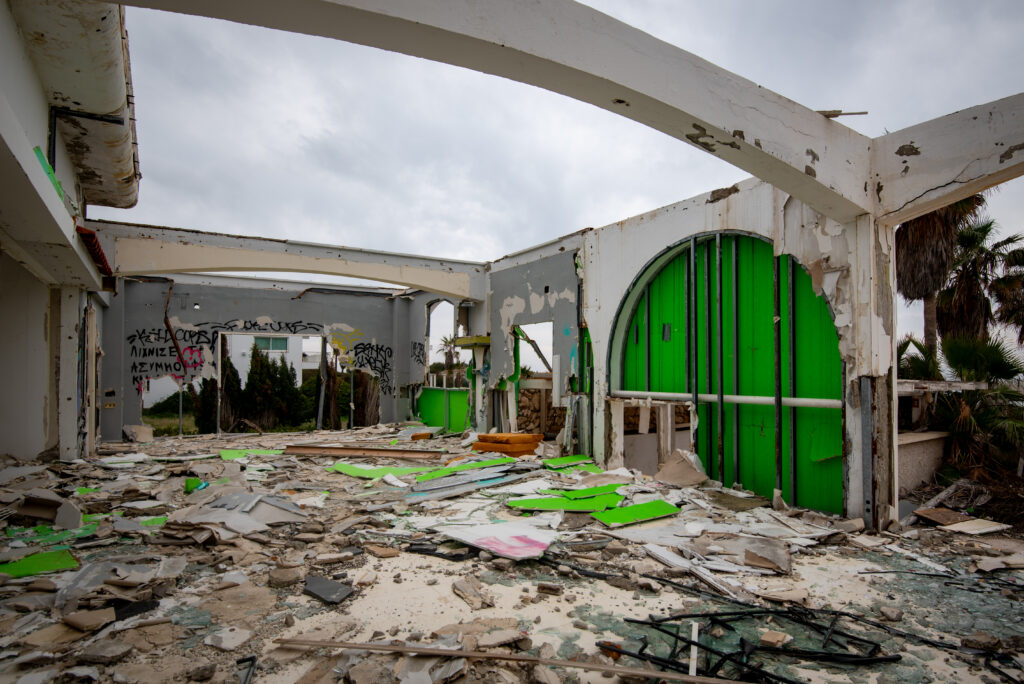


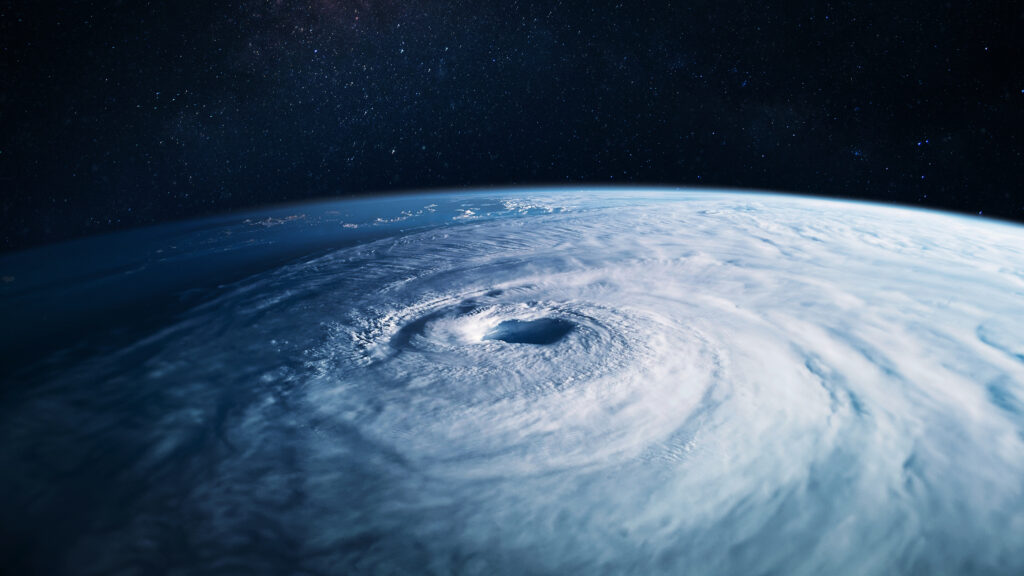
What is a hurricane and why should you prepare?
Hurricanes are powerful storms that threaten lives, property and coastal communities each year.
On average, 14 tropical storms form every season in the Atlantic, and at least 7 become hurricanes.
The U.S. coastline is hit by 3 hurricanes every two years, one of them being major category (winds ≥ 179 km/h).
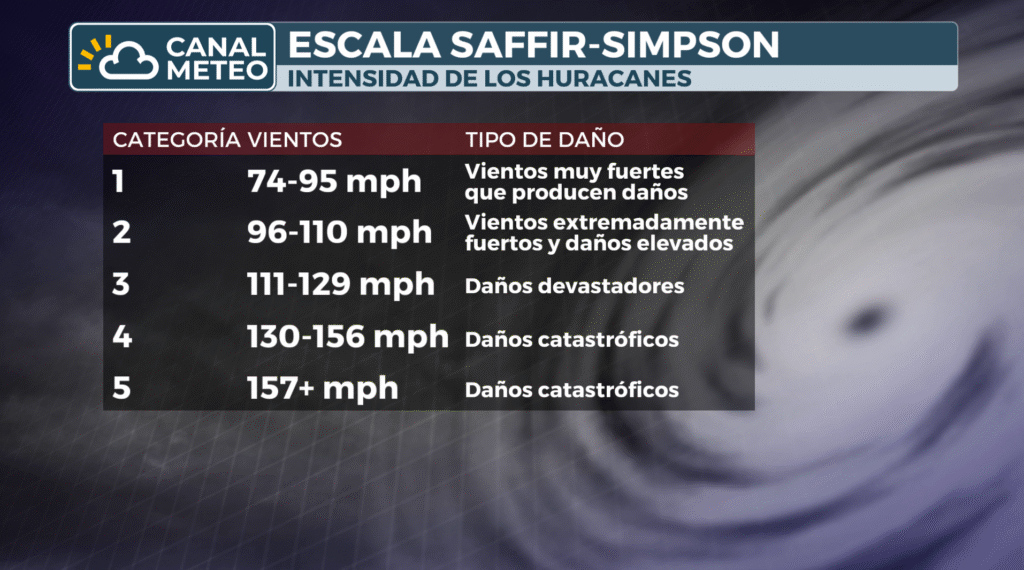
Saffir-Simpson scale for classifying hurricanes.
Hazards associated with hurricanes
Tropical cyclones can cause multiple hazards, even if they do not reach hurricane strength:
| Threat | Description |
|---|---|
| 🌊 Storm surge | Abnormal sea level rise, leading cause of hurricane deaths |
| 🌧️ Inland flooding | Heavy rains may cause flooding hundreds of kilometers from coastline |
| 💨 Destructive winds | They can blow off roofs, windows, trees and light structures. |
| 🌪️ Tornadoes | Frequent in outer storm bands |
| 🌊 Swell and currents | Dangerous waves and rip currents, even 1,000 km from the storm's center |
Official alerts: how to understand them
🟥 Warnings Act immediately!
- Hurricane WarningHurricane conditions are expected within 36 hours.
- Storm Surge WarningRisk of flooding due to cyclonic tides
- Extreme Wind Warning: Extreme winds (>185 km/h) imminent
- Tropical Storm WarningModerate tropical winds are expected
🟨 Watches (Watches) Get ready
- Hurricane WatchHurricane possible within 48 hours
- Storm Surge Watch: Possible cyclonic tide in 48 hours
- Tropical Storm WatchPossible tropical winds
**[HERE IS AN INFOGRAPHIC]** [HERE IS AN INFOGRAPHIC
Suggested title: "Types of alerts: what to do in each case".
Before the season: get ready
Know your area
- Are you in an evacuation zone or near the coast?
- Consult with civil protection or at hurricanes.gov
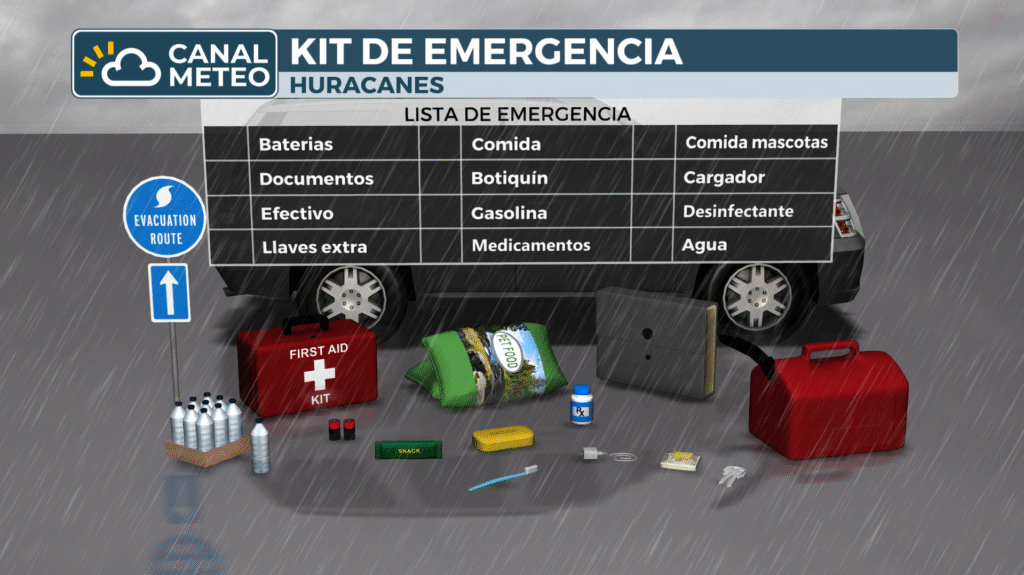
Emergency kit
- Water, non-perishable food, medicines, flashlights, batteries, NOAA radio, etc.
Family plan
- Define meeting points, emergency contacts and evacuation routes.
Protect your home
- Install shutters or timbers, secure exterior objects
- Review insurance policies (standard does NOT cover hurricanes or floods).
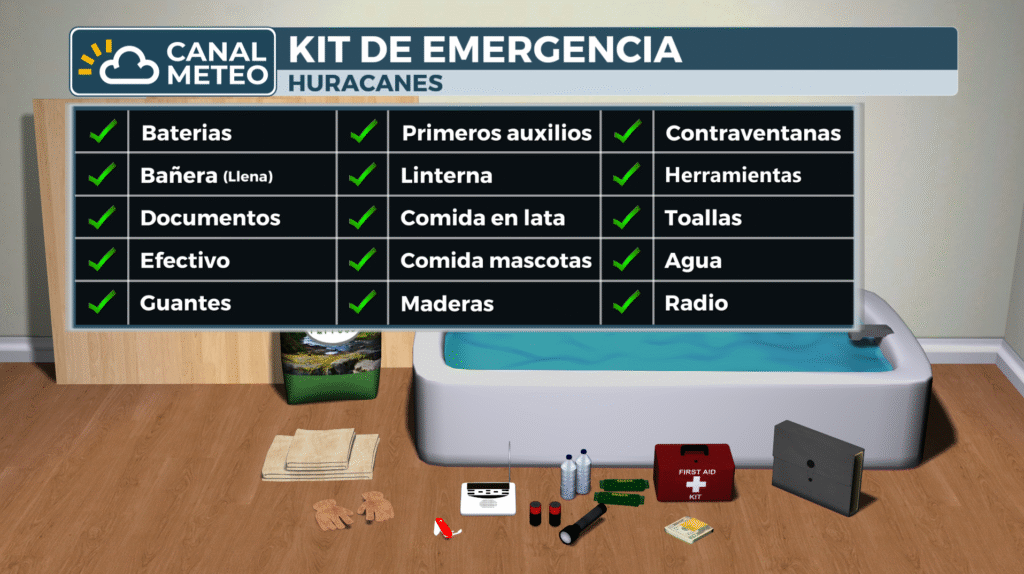
Emergency kit at home before a hurricane arrives
During the hurricane: what to do
- Follow instructions from local authorities (radio, TV, NOAA Weather Radio).
- If you are ordered to evacuate, do it without waiting
- Take shelter in an interior room, without windows.
- Do not use candlesuses battery-operated flashlights
- If the eye of the hurricane passes, don't leave: the winds return from the opposite side.
After the hurricane: safety first
- Do not return until the authorities allow it
- Prevents downed cables, gas leaks or damaged structures
- Do not walk or drive through flooded areas.
- Use generators only outdoors, away from windows.
- Wear gloves and boots when checking for damage
- Inform your family that you are well (you can register at Red Cross Safe & Well)
Share your story
Have you lived through a hurricane? Your experience can help others to be better prepared.
✉️ Write to us at: social@canalmeteo.tv
Include the year, city, state and how you prepared for it or how it affected you.