

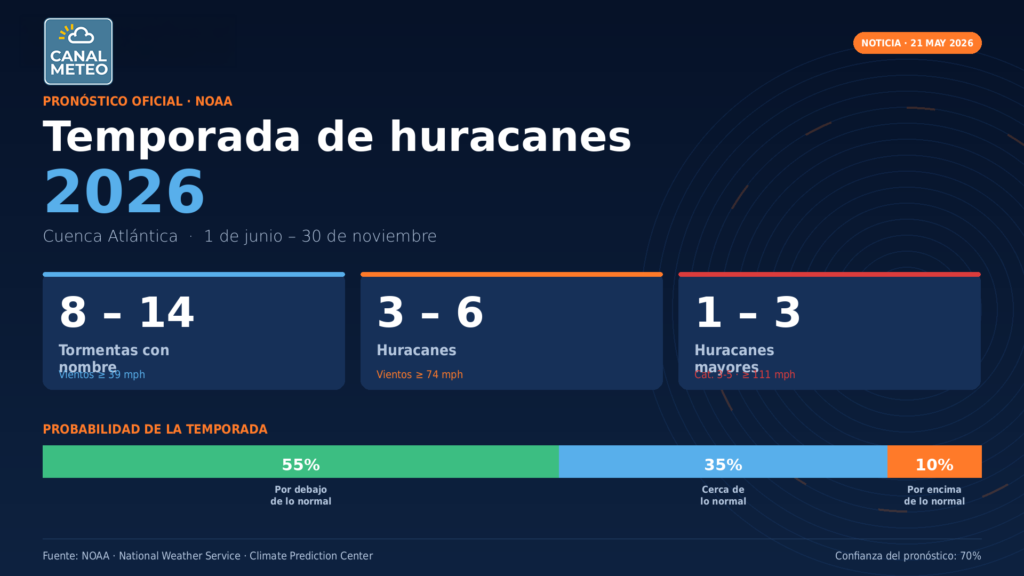
The 2026 Atlantic hurricane season will be less active than normal, according to NOAA's new forecast presented this May 21. The federal agency estimates between 8 and 14 named storms. Of these, between 3 and 6 could become hurricanes, and 1 to 3 would reach major hurricane status.
The announcement was made from NOAA's Air Operations Center in Lakeland, Florida, home of the famous hurricane hunter aircraft.
What does the forecast say for the 2026 hurricane season?
NOAA assigns a 55% probability to a below-average season. The remaining 35% points to a near-average season. Only a 10% suggests an above-average season.
Forecasters have a 70% confidence level for these ranges. An average season typically produces 14 named storms, seven hurricanes, and three major hurricanes.
The official season kicks off on June 1st and runs until November 30th.
Factors explaining this 2026 hurricane season
Three main ingredients shape this forecast. First, El Niño is expected to develop and strengthen during the season. This climate pattern typically curbs the formation of tropical cyclones in the Atlantic.
On the other hand, Atlantic Ocean temperatures will be slightly warmer than average. Additionally, the trade winds will blow weaker than usual. These two factors, in contrast, favor the development of storms.
The result is a tug-of-war between opposing forces. El Niño appears to be prevailing this time, although uncertainty remains part of the game.
A storm is named when its winds reach 39 mph or more. It becomes a hurricane when it surpasses 74 mph. Major hurricanes (categories 3, 4, or 5) have sustained winds of 111 mph and up.
Storm names for 2026
The World Meteorological Organization has already published the official list. These are the 21 names assigned for this season:

Arthur, Bertha, Cristobal, Dolly, Edouard, Fay, Gonzalo, Hanna, Isaias, Josephine, Kyle, Leah, Marco, Nana, Omar, Paulette, Rene, Sally, Teddy, Vicky, and Wilfred.
New tools for this 2026 hurricane season
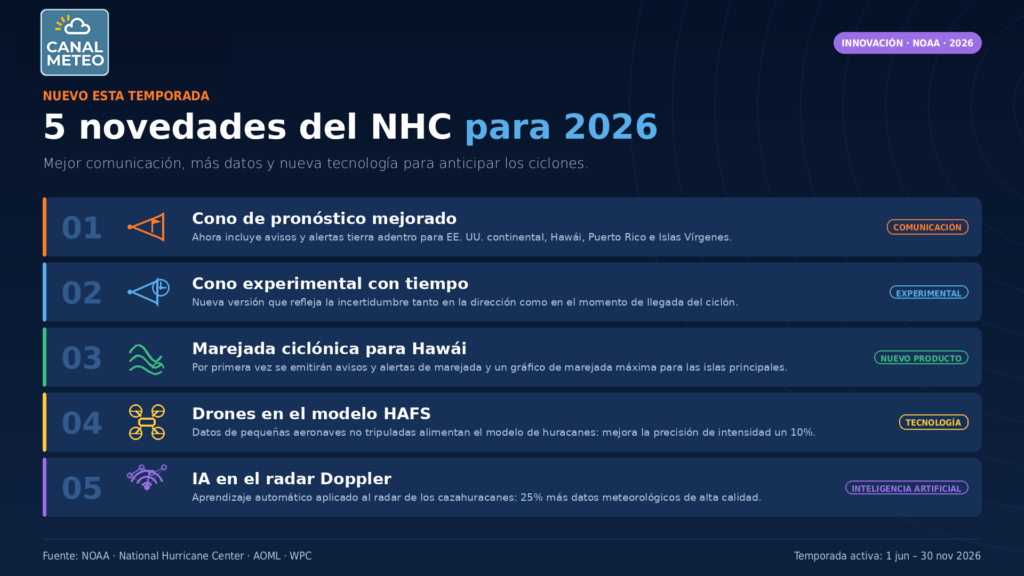
NOAA is launching several relevant technological improvements. The National Hurricane Center (NHC) will incorporate advisories and watches for inland areas within the traditional forecast cone. This new feature will cover the continental United States, Hawaii, Puerto Rico, and the Virgin Islands.
An experimental version of the cone that will better reflect trajectory and timing uncertainties will also be tested. Meanwhile, Hawaii will receive cyclone surge products specific to its main islands for the first time.
Artificial intelligence for prediction
For the first time, data from small drones will be incorporated into NOAA's forecast model. Scientists estimate that this improvement will increase the accuracy of hurricane intensity forecasts by 10%.
In addition, the AOML laboratory applies machine learning to the Doppler radar mounted on the tails of hurricane-hunting aircraft. This method collects more than 251 terabytes of additional meteorological data.
Preparation: The Key to Any Season
Although the forecast points to less activity, a single storm is enough to define an entire season. Experts remind us that seasonal forecasts do not indicate where systems will make landfall. Nor do they predict when they will do so.
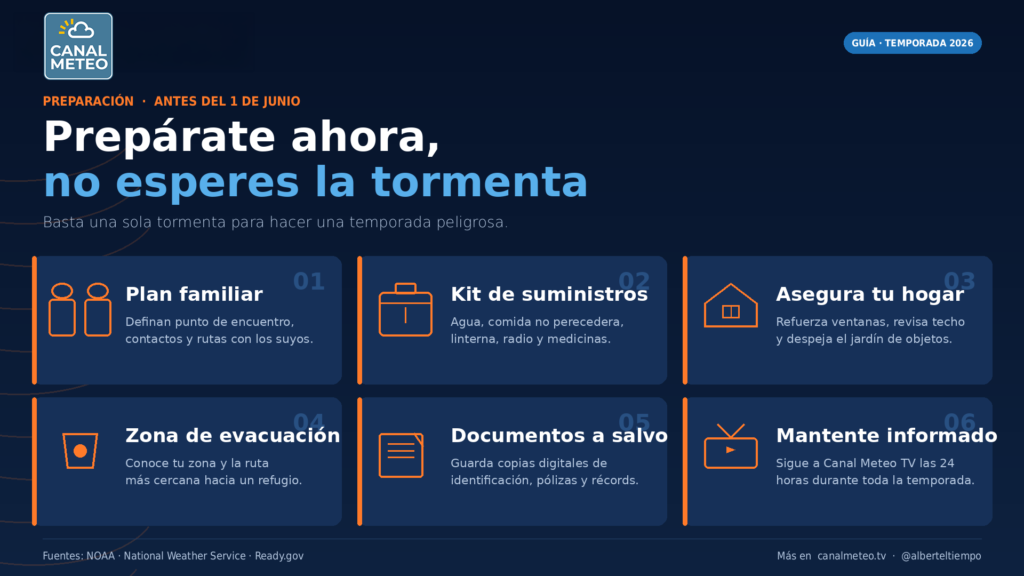
Therefore, early preparation remains fundamental. Reviewing the family plan, securing the home, and knowing evacuation routes are essential steps before June 1st.
What's coming in the 2026 hurricane season
NOAA will update this forecast in August, just before the historic peak of the season. That critical period typically extends from mid-September to October.
The 2026 hurricane season promises to be quieter than usual. However, nature never reads the forecasts before acting. Stay informed with ongoing coverage from Meteo TV Channel throughout the season.