

Sea level abruptly accelerated in 2012. Antarctic ice is collapsing due to three causes at once. And the largest 3D map of the universe calls into question dark energy. This week, science offers no respite.
In this edition: Sea level rise jumps from 2.9 to 4.1 mm/year since 2012, according to a new study from the University of Toulouse. Antarctic sea ice collapses since 2015 due to a triple climate blow. The DESI instrument maps 47 million galaxies and suggests dark energy is evolving.
Sea level rise has suddenly accelerated since 2012

Something changed in the oceans around 2012. The sea level was rising at 2.9 mm per year. Suddenly it jumped to 4.1 mm per year. And it hasn't gone back down. Lancelot Leclercq's team at the University of Toulouse detected it. They presented the data on May 5 at the European Geosciences Union (EGU) in Vienna.
Three causes behind the leap
The team points to several factors acting together. Ice sheets are melting faster. Less freshwater is stored on land. And aerosol pollution fell in countries like China. Aerosols were cooling the atmosphere. As they decreased, warming accelerated. Anny Cazenave, also from the University of Toulouse, elaborates: the change in trend is linked to an increase in anthropogenic radiative forcing.
The deep ocean is also warming
A second study presented at the EGU adds another piece to the puzzle. Waters below 2 km are beginning to warm and expand. Chunxue Yang, of the Italian National Research Council, explains that this deep-water warming is already contributing 0.4 mm per year to sea level rise. That accounts for 10% of the current total rise. The big problem: there are no systematic measurements below 2 km. Yang used ocean models to estimate the impact. Much of the warming occurs in the North Atlantic, off the U.S. East Coast.
📎 Read the full article in New Scientist
Triple climate blow collapses Antarctic ice
For decades, Antarctic sea ice was the great climate exception. While the Arctic melted, the south grew. That ended in 2015. Since then, the ice has fallen to historic lows without recovering. A new study reveals there was no single culprit. Three factors of climate chaos struck at once.
A difficult threshold to reverse
The combination of three simultaneous causes explains the abruptness of the collapse. The ice did not give way little by little: it fell all at once. Scientists warn that the system has crossed a threshold. Recovering pre-2015 levels will not be easy. The Antarctic ecosystem depends directly on that sea ice. Its loss affects the food chain, ocean currents, and global climate.
📎 Read the full article on Phys.org
The largest 3D map of the universe challenges dark energy
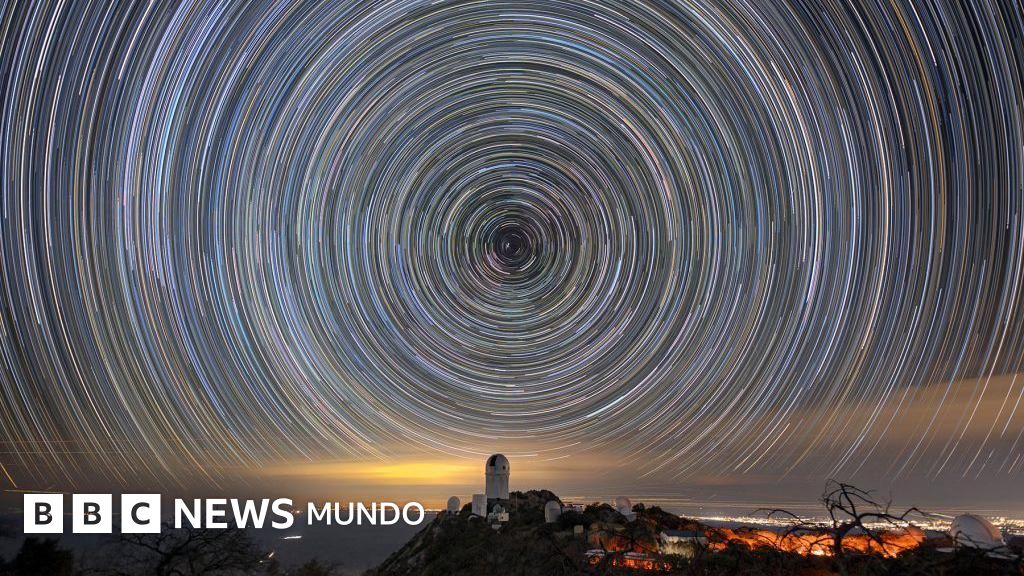
The DESI instrument has 5,000 fiber optic detectors. It is installed on the Mayall telescope at the Kitt Peak National Observatory in Arizona. For five years, it mapped a third of the sky, measuring over 100,000 galaxies per night. The result: more than 47 million galaxies, quasars, and 20 million stars. This is more than 6 times everything measured before. The map spans 11 billion light-years.
Dark energy might be changing
The most striking finding is what DESI suggests about dark energy. This mysterious force makes up 70% of the universe. It has always been modeled as a constant, fixed, and unchanging quantity. DESI already challenged this assumption in 2025. Now it reinforces this: dark energy could be weakening over time. Researcher Luz Ángela García, PhD, from ECCI University (Colombia), sums it up for BBC Mundo: these clues «foretell a different future for our universe.» If dark energy evolves, the standard model of the cosmos needs a thorough revision.
📎 Read the full article on BBC Mundo
What's coming next week?
Sea level rise will remain a central topic in the coming months. There is more data from the EGU awaiting publication. Antarctic ice is entering its austral winter: we'll see if it manages some recovery. And DESI continues to measure. Every new piece of data brings us closer to understanding if dark energy is truly changing. Follow Canal Meteo TV to not miss any updates.
For more official weather information, consult the National Weather Service (NWS) hello National Oceanic and Atmospheric Administration.
Explore more articles at Meteo TV Channel.