This week, science delivered three extraordinary stories. They confirmed winds in the central black hole of the Milky Way. They tested the first vaccine designed by artificial intelligence in humans. And an AI discovered 1,750 hidden earthquakes under Alaska.
In this edition: The Sagittarius A* wind, detected after a 50-year search. The AI-designed Cambridge vaccine, already tested in humans. One thousand seven hundred fifty hidden earthquakes revealing the edge of a microplate in Alaska.
The galactic black hole blows: historic finding after 50 years
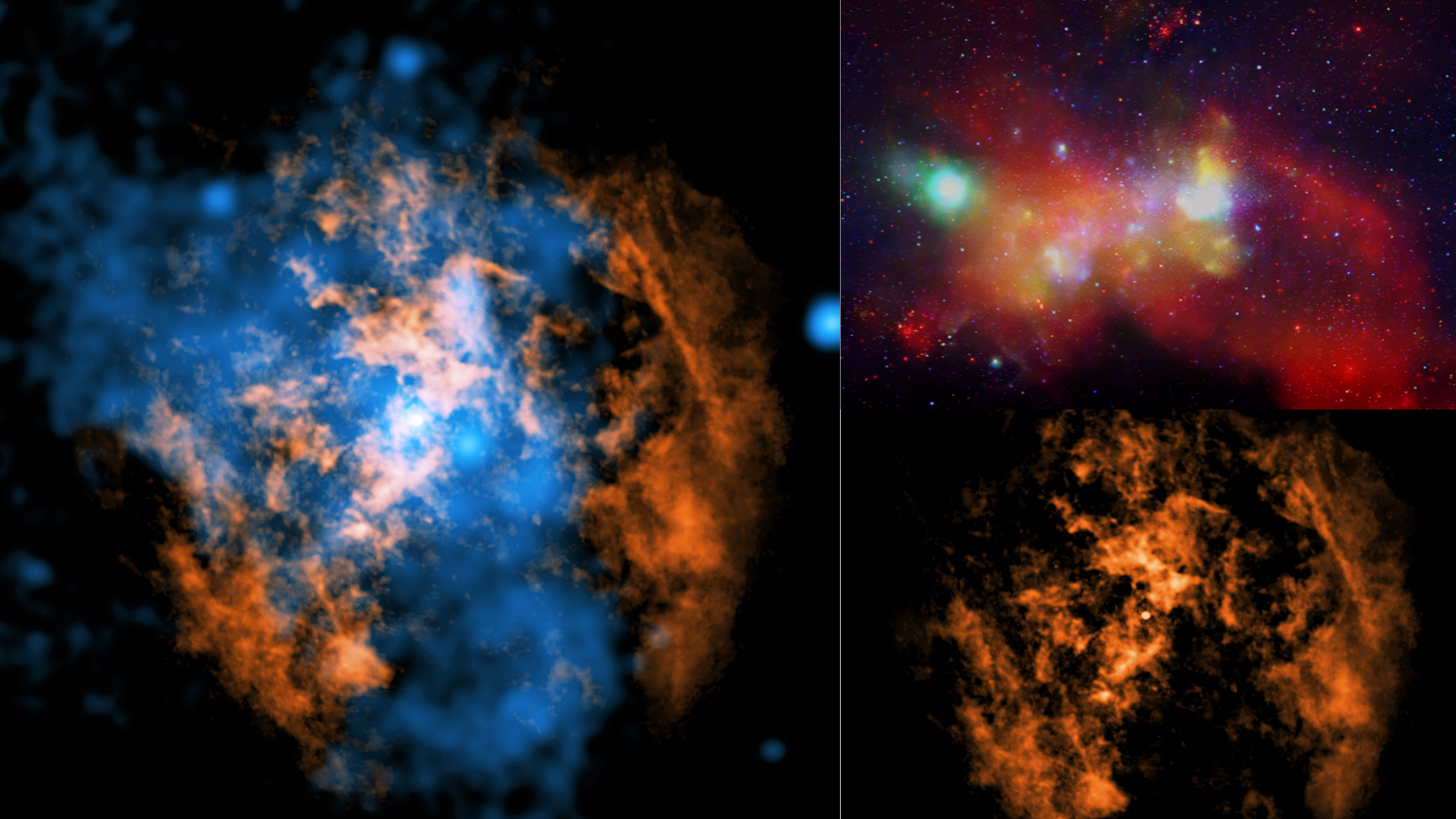
For fifty years, astronomers suspected that Sagittarius A* produced winds. Now they have confirmed it. The team is led by Mark Gorski, a researcher at Northwestern University, along with Lena Murchikova. They used five years of data from the ALMA radio telescope, comprising 66 antennas in northern Chile. They found a three-light-year conical cavity in the cold gas near the black hole.
A cavity that only a black hole can explain
The hot winds from the black hole push or heat the surrounding cold gas, creating that enormous void. The surrounding stars do not generate enough energy to carve it out. To confirm this, they cross-referenced the data with NASA's Chandra space telescope. The conical shape of the cavity points directly at Sgr A*. «There it is. It's what everyone has been looking for for 50 years,» Gorski said upon seeing the results.
Our black hole is not unique in the universe
The finding also detected molecular gas very close to Sgr A* feeding the black hole. This equips it with other known supermassive black holes. Murchikova emphasized that the wind is not powerful and that its direction varies over time. «It shows that our black hole is not unique,» she noted. The work reinforces our understanding of how these objects interact with their galactic environment.
📎 Read the full article on Space.com
First AI-designed vaccine: human trials passed
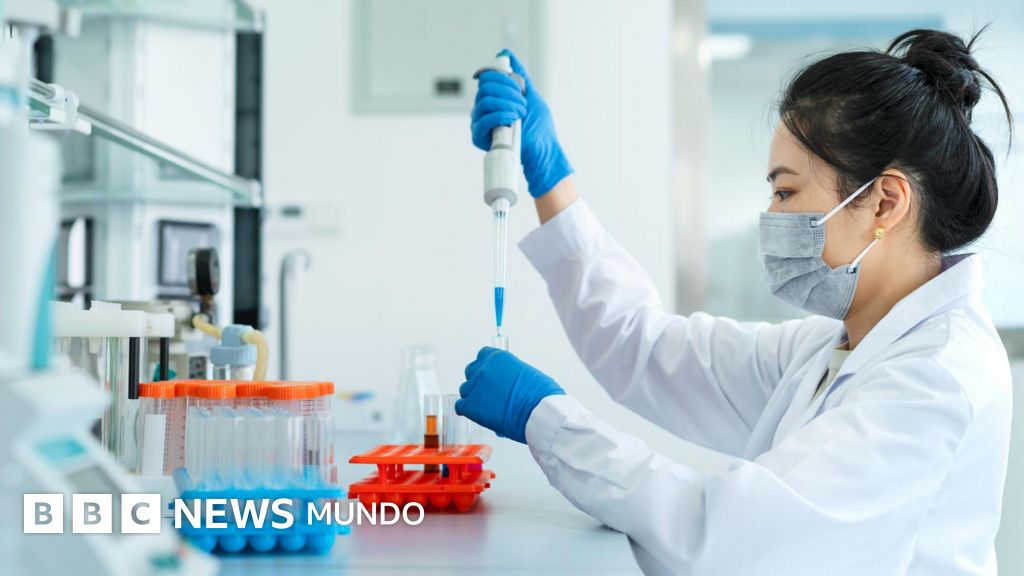
The team of Professor Jonathan Heeney at the University of Cambridge has designed a vaccine whose antigen was created entirely by artificial intelligence. This is the first time this has happened and it is being tested in people. The vaccine targets all known coronaviruses, including variants of COVID-19. It also covers animal viruses with pandemic potential. The first trials, conducted on 39 volunteers, evaluated its safety.
How AI designs vaccine antigens
AI analyzed coronavirus genetic codes registered by viral surveillance programs. From these, it designed a superantigen. This component trains the immune system to protect it against an entire family of viruses, even if they mutate. Professor Saul Faust, of the University of Southampton, participated in the trials. He called the AI design «really exciting» for pandemic preparedness.
Modest results, but the path is promising.
The impact on the immune system was modest in this first phase. A second study with close to 200 participants will measure the response in more detail. The team is already working on universal vaccines for seasonal flu and Ebola. Heeney summarized it this way: «It's a fundamental shift in how we prepare for pandemics.» The findings were published in the journal Journal of Infection.
📎 Read the full article on BBC Mundo
AI discovers 1,750 hidden earthquakes under Alaska
A machine learning algorithm tracked historical seismic records from Alaska. It found 1,750 earthquakes that had gone unnoticed by traditional methods. These quakes are not random noise: they accurately map the edge of the Yakutat microplate. This 155-mile-long fringe is sinking beneath the North American plate in a process called subduction.
A geological boundary mapped with new clarity
The Yakutat microplate was known, but had never been mapped at this resolution. Hidden earthquakes reveal its boundary as a razor's edge, according to the study. Knowing this edge precisely improves seismic risk models in the region. Alaska is one of the most seismically active areas on the planet. AI is rereading the geological past to better protect the future.
📎 Read the full article on Phys.org
What's coming next week?
We will closely follow the developments on the black hole Milky Way and the next phases of the Cambridge vaccine trial. Science doesn't take a summer break. Follow Canal Meteo TV so you don't miss any updates.
For more official weather information, consult the National Weather Service (NWS) hello National Oceanic and Atmospheric Administration.
Explore more articles at Meteo TV Channel.